Clipping vs Instagram and YouTube ads in India: cost per view
On published Indian figures checked in October 2026, clipping costs less per 1,000 views than Instagram Reels or YouTube Shorts ads. Reels ads run an estimated ₹45 to ₹140 per 1,000 impressions and Shorts ads ₹350 to ₹450, while clipping on Musubi pays a rate the brand sets, from ₹30 per 1,000 verified views.
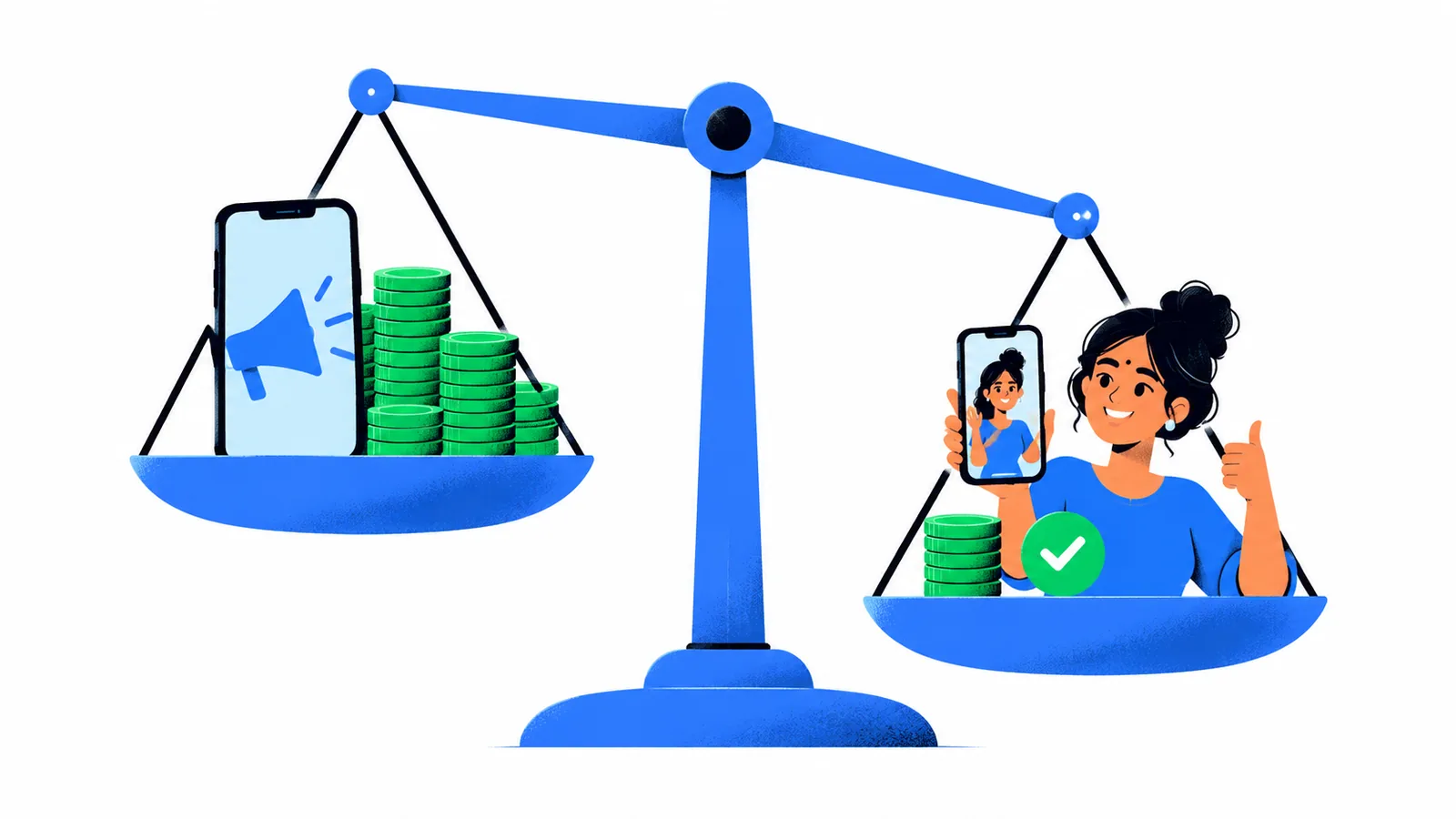
Clipping vs Reels and Shorts ads at a glance
On published Indian figures, clipping at the rates brands can set, from ₹30 per 1,000 verified views, costs less per 1,000 views than Reels ads or Shorts ads, once the ad prices are converted from impressions to views someone watched. A clipping view is a lighter unit, though, as the section on views explains. Ads still win on targeting, retargeting and conversion tracking. Clipping wins on views that land on real creator accounts, at a total you fix before you start. Figures checked 23 October 2026.
Musubi, which publishes this post, is an Indian marketplace where brands fund clipping campaigns that pay creators a rate per 1,000 verified views on Instagram Reels and YouTube Shorts. Read the comparison with that in mind: every ad figure below comes from a named outside source, and every Musubi figure is a rule, not a result.
| Channel | Cost per 1,000 | What is counted | Source and date |
|---|---|---|---|
| Clipping on Musubi | Set by the brand, from ₹30 (₹33 with the 10 percent fee) | Verified views on the creator's own Reel or Short | Musubi rules, October 2026 |
| Instagram Reels ads | ₹45 to ₹140 | Impressions: the ad was on screen | upGrowth estimate, September 2026 |
| Instagram video view ads | ₹25 to ₹180 | Paid video views | upGrowth estimate, September 2026 |
| YouTube Shorts ads | ₹350 to ₹450 | Impressions | Mega Digital, 5 June 2026, one agency's figure |
| YouTube skippable in stream ads | ₹2,000 to ₹3,000 (₹2 to ₹3 a view) | Views of 30 seconds, or a click | Mega Digital, 5 June 2026 |
For the clipping side in more depth, see what clipping costs per 1,000 views.
How are Instagram Reels ads billed?
Reels ads are bought through Meta Ads Manager and billed either per 1,000 impressions (CPM) or, for a 15 second ThruPlay goal, per ThruPlay. You pay for the billing event you choose, and the price comes out of an auction, so no rate is fixed in advance.
Meta's Impressions page in the Business Help Centre, read 23 October 2026, counts an impression as "the number of times an instance of an ad is on screen for the first time". It adds that "a video is not required to start playing for the impression to be counted". A CPM price is a price for being seen on screen, not for being watched.
ThruPlay is the watched alternative. Meta's About ThruPlay page, read 23 October 2026, offers two lengths:
- 6 second ThruPlay: counted when someone watches at least 6 seconds, or 97 percent of a shorter video. Billed on CPM only.
- 15 second ThruPlay: counted when someone watches at least 15 seconds, or 97 percent of a shorter video. Billed on CPM or per ThruPlay.
ThruPlay runs in the Awareness and Engagement objectives, with Instagram Reels among its placements. Ads Manager also reports 3 second video plays and a cost per play.
How are YouTube Shorts and in feed ads billed?
YouTube ads are bought through Google Ads, either per 1,000 impressions or per view (CPV), and what counts as a view depends on the ad format. Google's cost per view definition, read 23 October 2026, sets three rules:
| Format | A billable view is counted when |
|---|---|
| YouTube Shorts ads | Someone watches 10 seconds, or the whole ad if it is shorter, or clicks the call to action |
| In feed ads | Someone clicks the thumbnail to watch, or the ad autoplays for at least 10 seconds |
| Skippable in stream ads | Someone watches 30 seconds, or the whole ad if it is shorter, or interacts with it |
Google's page on CPV bidding adds that a YouTube public view is counted "the moment a video ad starts to play" on Shorts and in stream ads. You are not billed for those public views, only for the views that meet the rules above. Bumper and non skippable ads cannot be bought per view.
Budgets in Google Ads are averages. Google's help page on average daily budgets says that on a given day most campaigns can spend up to twice the daily budget, while a month stays within 30.4 times it.
Is an impression a view? Impressions, ThruPlays and public views
No. An impression means the ad was on screen, a ThruPlay or a paid YouTube view means someone watched for a set number of seconds, and a public view on a Reel or Short counts every start. Comparing their prices per 1,000 without converting is comparing different things.
| Term | Who counts it | What it means | Minimum watch |
|---|---|---|---|
| Impression | Meta, Google | The ad was on screen | None; the video need not play |
| 3 second video play | Meta | The video played for 3 seconds | 3 seconds |
| ThruPlay | Meta | Watched to 6 or 15 seconds, or 97 percent of a shorter video | 6 or 15 seconds |
| Shorts ad view (paid) | Watched 10 seconds, or the call to action clicked | 10 seconds | |
| Reel view (public) | "The number of times your reel starts to play or replay" | None | |
| Short view (public) | YouTube | Each start or replay, since 31 March 2025 | None |
The Reel definition comes from Instagram's reels insights page, read 23 October 2026. The Short rule was announced by YouTube and reported by TechCrunch on 26 March 2025; the older measure is now called engaged views.
Clipping pays on the lighter unit. A clipping view is a public view on the creator's post, the same count anyone sees under the Reel or Short. It has no minimum watch time, unlike a ThruPlay or a paid Shorts view. That is a fair point against clipping, and the reason this post compares clipping with impressions converted to watched views, not with ThruPlays.
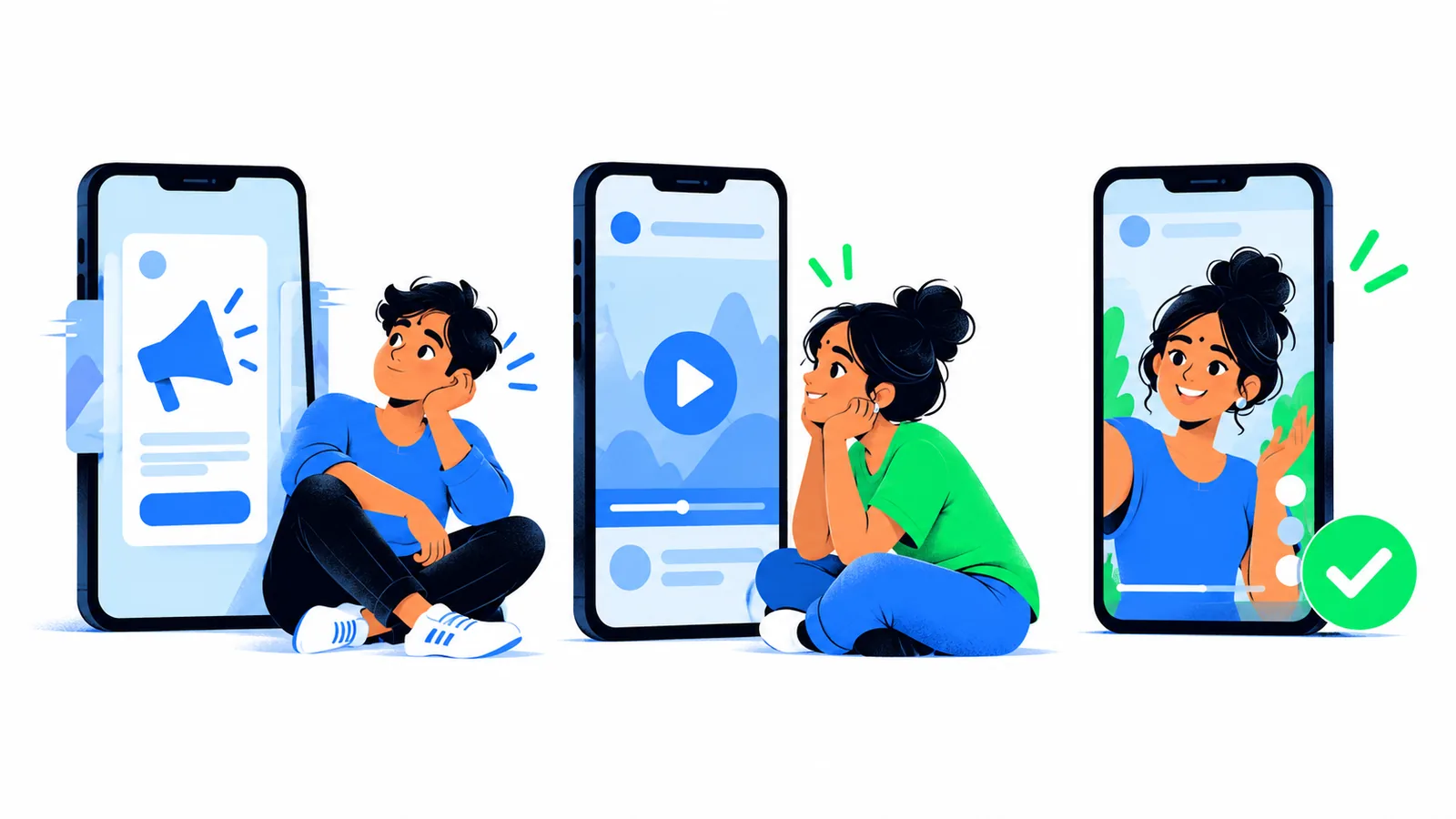 An impression, a watched ad view and a verified public view count different events, so convert before you compare prices.
What do Reels and Shorts ads cost in India?
Reels ads cost an estimated ₹45 to ₹140 per 1,000 impressions in India, and Shorts ads ₹350 to ₹450 per 1,000 impressions, on the figures published in 2026. Neither Meta nor Google publishes an official rate for India, so every number here is a third party estimate, and your own auction will differ by audience, category and season.
- Reels ads: ₹45 to ₹140 CPM, the cheapest Instagram placement, in upGrowth's Instagram ads pricing page by Amol Ghemud, updated 17 September 2026 and labelled "upGrowth estimate, September 2026". The same page gives ₹25 to ₹180 per 1,000 video views, without saying which view metric it means.
- Shorts ads: ₹350 to ₹450 CPM, from Mega Digital, by Kaylin Hoang, 5 June 2026. The page gives no source for it, and no second source with an advertiser side Shorts rate for India was found, so treat it as one agency's figure.
- Skippable in stream ads: ₹2 to ₹3 per view, from the same Mega Digital page. That is a 30 second view on longer videos, not a Short.
No citable rupee figure for a cost per ThruPlay or a Shorts CPV in India was found, so this post does not quote one. Run a small test in your own account to get it.
How is clipping priced?
Clipping is priced per 1,000 verified views, from a budget the brand funds before the campaign starts. On Musubi the brand sets three numbers, and creators post clips on their own Instagram Reels or YouTube Shorts accounts.
- The rate per 1,000 verified views. The brand picks it. The lowest Musubi accepts is ₹30.
- The cap per clip. The most one clip can earn. Musubi refuses a cap above half the budget.
- The budget. From ₹2,000, and a hard ceiling: earnings accrue against it and never past it.
A 10 percent platform fee sits on top of the budget, so ₹30 per 1,000 views costs ₹33 all in. The fee is taken at launch and is not refunded after that. Whatever the campaign does not spend returns to your Musubi wallet when it closes.
Views are read from the post on a schedule, never typed in by the creator, and every clip is reviewed before it is paid. A campaign can be clipping, where creators cut your existing footage, or UGC, where they make new videos for you. Both pay per 1,000 verified views. The full setup is in how to run a clipping campaign in India.
How do clipping and ads compare, point by point?
Ads buy a chosen audience and the tools to follow it up; clipping buys posts on creators' own accounts at a ceiling you set in advance. The table sets out the differences that matter for a brand.
| Reels ads (Meta) | Shorts and in feed ads (Google) | Clipping (Musubi) | |
|---|---|---|---|
| Billing unit | Impressions, or 15 second ThruPlays | Impressions, or views per format rules | Verified public views on the creator's post |
| Price | Auction | Auction | A rate the brand sets, from ₹30 per 1,000 |
| Targeting | Audience you choose | Audience you choose | The creator's followers and whoever the platform recommends the clip to |
| Retargeting | Yes, from people who engaged | Yes, from your data segments, such as channel viewers | No |
| Where it appears | In Reels and other placements, shown as an ad | In Shorts, feeds and videos, shown as an ad | A normal post on the creator's own account |
| Audience trust | A brand speaking to a stranger | A brand speaking to a stranger | A creator the viewer may already follow |
| Creative needed | Your own finished ads | Your own finished ads | A brief and footage; creators make the edits |
| Control | Full control of the ad, audience and schedule | Full control of the ad, audience and schedule | You set the brief, rate, cap and budget; every clip is reviewed before payment |
| Measurement | Ads Manager metrics and conversion tracking | Google Ads metrics and conversion tracking | Views read from each post on a schedule; sales need your own links or codes |
| Minimum spend | A minimum per ad set, set by Meta; upGrowth suggests ₹500 a day for a test | Average daily budget you choose; Mega Digital says about ₹500 a day | ₹2,000 budget plus the 10 percent fee |
| Most you can spend | Your budget, within the platform's pacing rules | Up to twice the daily budget on a day, 30.4 times it in a month | Budget plus fee, fixed before launch |
What does 1,000 watched views cost? A worked example
For example, take ₹11,000 to each channel and assume that half of all ad impressions turn into a view someone watched. The 50 percent share is an assumption chosen to show the arithmetic, not a measured rate; your own Ads Manager or Google Ads report will give the real share.
The formula is: cost per 1,000 watched views = CPM ÷ share of impressions watched.
| ₹11,000 spent on | Price used | Impressions bought | Watched views, at 50 percent | Cost per 1,000 watched views |
|---|---|---|---|---|
| Reels ads, low estimate | ₹45 CPM | 2,44,444 | 1,22,222 | ₹90 |
| Reels ads, high estimate | ₹140 CPM | 78,571 | 39,285 | ₹280 |
| Shorts ads, low estimate | ₹350 CPM | 31,428 | 15,714 | ₹700 |
| Shorts ads, high estimate | ₹450 CPM | 24,444 | 12,222 | ₹900 |
| Clipping, ₹10,000 budget at ₹40 plus ₹1,000 fee | ₹44 all in per 1,000 | Not bought | At most 2,50,000 verified views | ₹44 |
The clipping row is the example on Musubi's own campaign calculator, where ₹40 is a starting position for the slider, not a market rate. It is also a ceiling: if fewer clips land, you pay less and the rest returns to your wallet. The ad rows spend the full ₹11,000 whatever happens.
Change the assumption and the order holds on these figures. If only 25 percent of impressions are watched, Reels ads cost ₹180 to ₹560 per 1,000 watched views and Shorts ads ₹1,400 to ₹1,800. Clipping stays at the rate you set.
Two cautions keep the example honest. A clipping view has no minimum watch time, while the watched ad views in this table are whatever share you assume, so the units are still not identical. And the ad money reaches the audience you chose, while the clipping views reach whoever the creators and the platform reach.
When do ads win, and when does clipping win?
Ads win when you need a specific audience or a sale you can track; clipping wins when you need cheap, verified reach on creator accounts with a fixed ceiling.
Ads are the better buy when you need:
- Targeting. A city, an age band or an interest, chosen by you.
- Retargeting. Reaching people who watched your video or visited your site.
- Conversion campaigns. Optimising for purchases or leads, with tracking built in.
- Control of timing. Starting and stopping on a date, for a launch or a sale.
Clipping is the better buy when you need:
- Reach on creator accounts. Your product inside posts people chose to watch, not in an ad slot.
- A fixed ceiling. Budget plus fee is the most you can be charged, known before launch.
- Payment on delivery. Only verified views on reviewed clips are paid; a clip that flops costs little.
- Many edits at once. Several creators each cut your footage their own way, and you see which ones travel.
A creator paid a flat fee for one Reel is a third option, priced before any views exist. See clipping vs influencer marketing for that comparison.
How do you combine clipping and ads?
Use clipping to find the edits that people watch, then put money behind the best ones as ads, with the creator's permission. The clips have already been tested on a live audience, which is what ad creative is supposed to be.
- Run a clipping campaign first. A small budget is enough to see which clips earn views.
- Pick the clips that perform. Look at views per clip, not the total.
- Ask the creator. A clip on a creator's account is their post. Get written permission before you use it in an ad, and agree what you pay for that use.
- Run it as a partnership ad. Meta's partnership ads run from a creator's handle once they grant permission, and can turn a creator's existing posts that tag you into ads. Creators can withdraw that permission, which pauses the ads.
- Retarget the viewers. Build an audience of people who watched the ad and follow up with an offer.
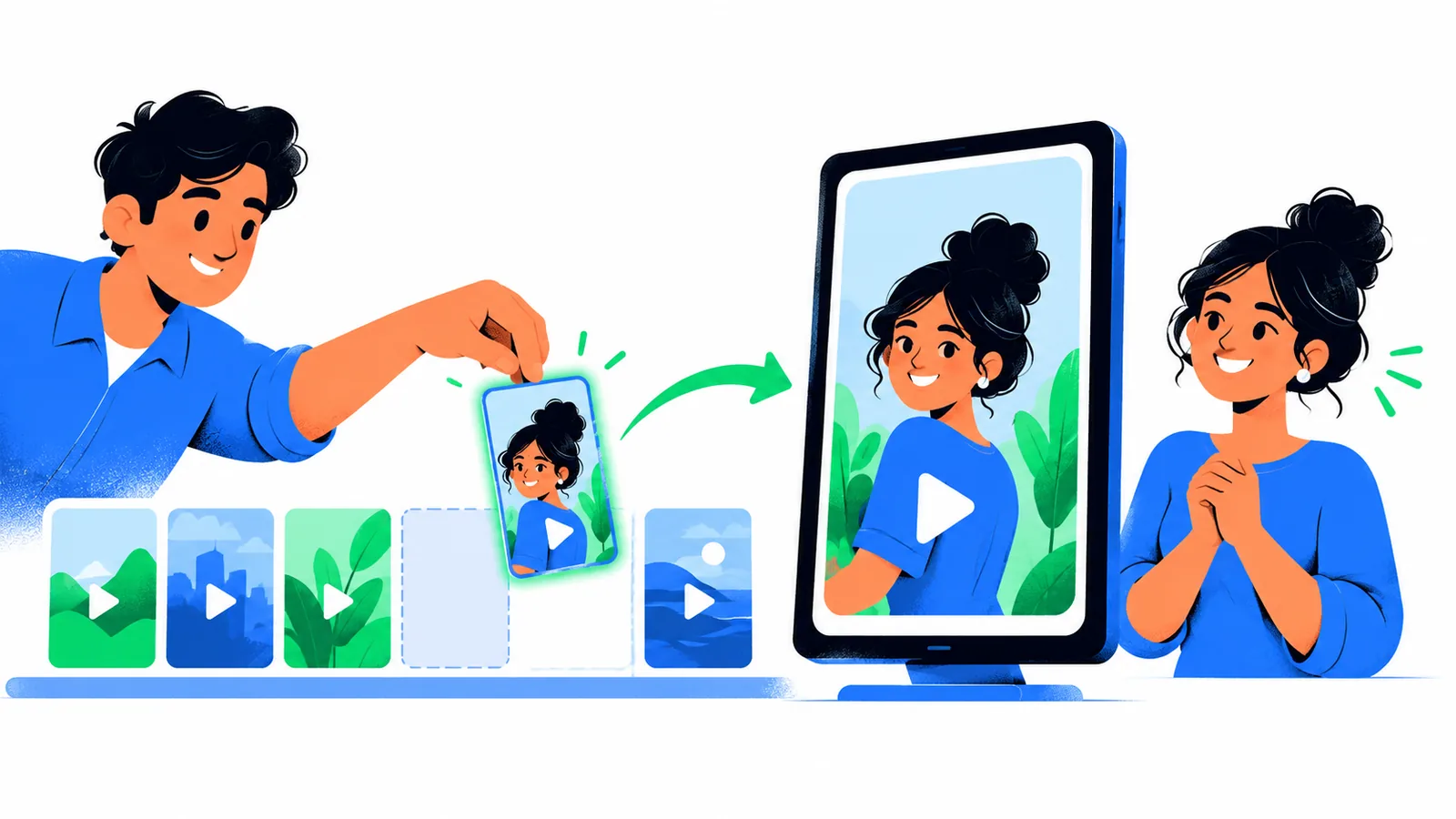 Clips that already earn views make tested ad creative, once the creator agrees to it.
Cheaper money finds what works; dearer money scales it. For a larger campaign that mixes both, talk to the team.
Which mistakes skew the comparison?
Most bad comparisons between clipping and ads come from setting a price per 1,000 impressions beside a price per 1,000 views. Avoid these:
- Comparing CPM with a rate per view. Convert impressions to watched views first, with a share you have measured.
- Treating a public view as a ThruPlay. A Reel or Short view has no minimum watch time; a ThruPlay needs 6 or 15 seconds.
- Forgetting the fee. ₹40 per 1,000 views on Musubi is ₹44 all in.
- Quoting one agency's rate as the market. The Shorts ad figure here comes from one page; check your own account.
- Judging clipping on sales without tracking. Give creators a link or code, or you will only see views.
- Boosting a creator's clip without permission. The post is theirs; ask first.
Before you fund, put your own budget, rate and cap into the calculator and read the ceilings it gives.
Questions brands ask
What does cost per ThruPlay mean in Meta ads?
Cost per ThruPlay is the amount spent divided by the number of ThruPlays. Meta counts a 15 second ThruPlay when someone watches at least 15 seconds of a video ad, or 97 percent of a shorter one, and a 6 second ThruPlay at 6 seconds. You can be billed per 15 second ThruPlay or per 1,000 impressions, according to Meta's Business Help Centre in October 2026.
Can you put ads on YouTube Shorts?
Yes. Google Ads runs video ads between Shorts, and on a cost per view basis a Shorts ad view is billed when someone watches 10 seconds, or the whole ad if shorter, or clicks the call to action. One agency, Mega Digital, put Shorts ads in India at ₹350 to ₹450 per 1,000 impressions in June 2026; Google publishes no official rate.
How much do 1 lakh views cost through clipping compared with Reels ads?
For example, at ₹30 per 1,000 verified views, the lowest rate Musubi accepts, 1 lakh clipping views cost ₹3,300 with the 10 percent fee. On upGrowth's September 2026 estimate of ₹45 to ₹140 per 1,000 impressions, 1 lakh Reels ad impressions cost ₹4,500 to ₹14,000, and only some of those impressions become watched views.
Can I choose who sees the clips in a clipping campaign?
Not the way you choose an ad audience. Clips go out on creators' own Instagram Reels or YouTube Shorts accounts, so they reach those creators' followers and whoever the platform recommends the clip to. You shape it through the brief and the creators who take it up. If you need a set city, age band or interest, or retargeting, use ads.
What happens to clipping budget that is not spent?
On Musubi the budget is a hard ceiling, so earnings never run past it, and whatever the campaign has not spent returns to your Musubi wallet when it closes. The 10 percent platform fee is taken at launch and is not refunded after that, even if the campaign is paused or cancelled. An ad budget, by contrast, is spent as the ads are delivered.
Are clipping views self reported by creators?
Not on Musubi. Views are read from the Instagram Reel or YouTube Short itself on a schedule, never typed in by the creator, and every clip is reviewed before it is paid. A clipping view is a public view, which counts each time the video starts to play, so it has no minimum watch time the way a ThruPlay does.
Plan a campaign
Set a rate, a cap and a budget, and see what it buys before you pay.
Plan a campaign