UGC vs clipping: what's the difference and which pays more in India?
UGC is original video you film for a brand, usually paid a flat fee per video and posted on the brand's account. Clipping is cutting existing long footage into short clips for your own account, paid per 1,000 views. In India, UGC pays more for a beginner with few views; clipping pays more once clips pull large view counts.
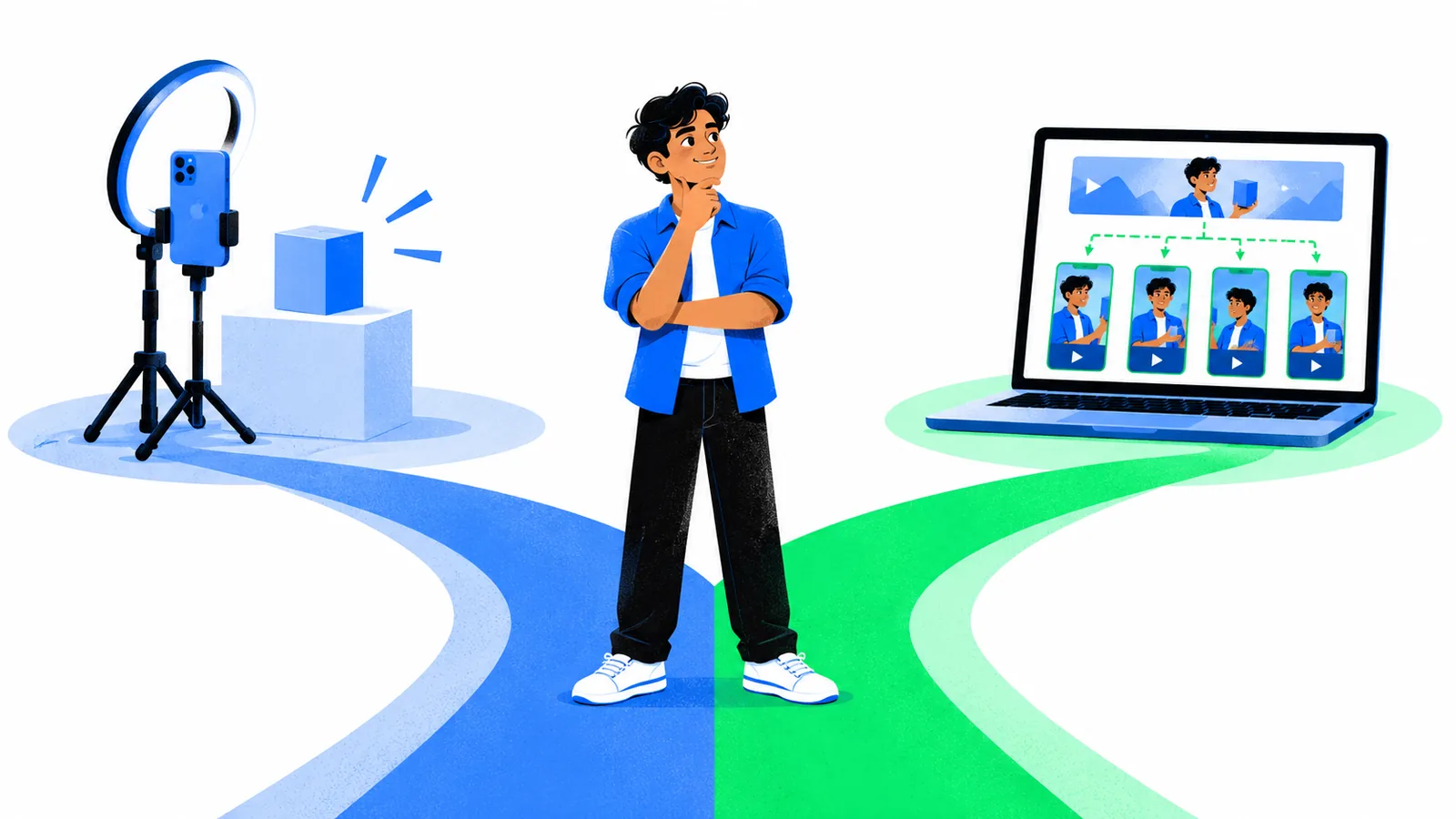
UGC vs clipping: the short answer
UGC is original video you film for a brand, usually for a flat fee per video, and the brand posts it or runs it as an ad. Clipping is cutting short clips from footage that already exists and posting them on your own account, paid per 1,000 views. UGC pays a known amount for each video. Clipping pays for reach, so it can pay nothing or a lot.
This guide is written and published by Musubi, an Indian marketplace where brands pay creators per 1,000 verified views on Instagram Reels and YouTube Shorts. Musubi runs clipping campaigns, so weigh what follows with that in mind. Every outside figure below has its source and the date it was checked.
| UGC | Clipping | |
|---|---|---|
| You make | A new video, often with your face or hands on camera | Short clips cut from someone else's long video |
| Posted on | Usually the brand's account or its ads | Your own account |
| Paid by | A flat fee per video | A rate per 1,000 views |
| Followers needed | None, usually | None on most platforms; views matter |
| You get paid even with low views | Yes | No |
What is UGC?
UGC, short for user generated content, is a video a creator makes from scratch for a brand, in the style of an ordinary customer rather than a polished advert. The brand pays for the video file and the right to use it. In paid UGC the video usually goes out on the brand's Instagram page or as a Meta or YouTube ad, not on the creator's own feed, which is why a UGC creator does not need a large following (Dazzlerr, 19 June 2026).
Common UGC formats are an unboxing, a talking head testimonial, a product demo and a short tutorial. You plan the shot, film it on a phone, record a voiceover or speak to camera, and edit it to the brand's brief.
How UGC pays in India
UGC in India is usually paid per video, agreed before you film. Two Indian rate guides give these ranges:
- By experience (Artha, 11 September 2026): beginners with up to 3 months of work earn ₹1,500 to ₹5,000 per video, intermediate creators ₹5,000 to ₹15,000, and experienced creators ₹15,000 to ₹50,000 or more.
- By format (Dazzlerr, 19 June 2026): a 30 second unboxing ₹2,500 to ₹4,500, a 30 second testimonial ₹3,500 to ₹5,500, a 60 second product demo ₹5,000 to ₹7,500, and a 90 second tutorial ₹6,500 to ₹9,000, all approximate.
Both are blog rate cards, not surveys, so treat them as a starting point for negotiation. Dazzlerr also notes that letting a brand run your video as a paid ad for three to six months is priced on top of the base fee. Never hand over ad rights for good at the price of one organic video.
What is clipping?
Clipping is cutting the best moments out of a long video, such as a podcast, a stream, a film trailer or a founder's talk, and posting them as short vertical clips on your own Instagram Reels or YouTube Shorts account. You do not film anything new. A brand or creator hands over the footage and a brief, and you are paid for the views your clips get, as our guide to what clipping is explains in full. A free phone editor is enough; our guide to the best apps for clipping videos compares them.
 Clipping turns one long video into many short clips, and each clip earns on the views it gets.
Clipping pays per 1,000 views, at a rate the brand sets. Indian clipping platforms state these ranges on their own pages, checked on 21 October 2026:
- INDclipping says creators earn ₹30 to ₹100 per 1,000 views, at a rate the brand sets.
- ClipConnect says the range is ₹10 to ₹100 per 1,000 views, depending on the campaign and niche.
Most campaigns also cap what one clip can earn, so a clip that goes viral stops earning at the cap. The full picture of rates, caps and fees is in what clipping costs per 1,000 views in India, and the step by step version for creators is in how to make money clipping in India.
Where does affiliate fit in?
Affiliate is a third model: you post content with a tracked link or code, and you earn a commission only when someone buys through it. You are paid for sales, not for the video (UGC) or the views (clipping). The content goes on your own account, like clipping, but a clip with a million views and no sales earns nothing.
Affiliate suits creators whose audience already trusts their recommendations in one niche, such as tech, skincare or books. It is the hardest of the three to start with zero followers, because sales need an audience that buys.
UGC vs clipping vs affiliate: the full comparison
The three models differ most on whose account the post lives on and what triggers your pay. This table sets them side by side.
| UGC | Clipping | Affiliate | |
|---|---|---|---|
| Who makes the content | You, from scratch, to a brand brief | You, cut from the brand's or a creator's existing footage | You, about a product you choose or are given |
| Whose account it is posted on | Usually the brand's, or run as its ad | Yours | Yours |
| How pay works | Flat fee per video, agreed before you film | Rate per 1,000 views, up to a cap per clip | Commission on each sale through your link |
| Followers needed | Usually none; a portfolio matters more | None on most platforms; payment follows views | An audience that buys |
| Main skills | Filming, speaking to camera, lighting, scripting | Spotting hooks, fast editing, captions, posting rhythm | Trust in a niche, product knowledge |
| Who carries the risk | The brand: you are paid even if the ad flops | You: a clip with few views earns little | You: no sale, no pay |
| Typical pay basis in India | ₹1,500 to ₹5,000 per video for beginners (Artha, 11 Sep 2026); ₹2,500 to ₹4,500 for a 30 second unboxing (Dazzlerr, 19 Jun 2026) | ₹30 to ₹100 per 1,000 views (INDclipping); ₹10 to ₹100 (ClipConnect), both read 21 Oct 2026 | A percentage of each sale, set by the programme; no single rupee range |
UGC vs clipping in Whop: what the two campaign types mean
On Whop, UGC and clipping are two campaign types inside Content Rewards, and both pay per 1,000 views, not a flat fee. That is the key difference from classic UGC. Whop's Content Rewards guide, read on 21 October 2026, defines them this way, in close paraphrase:
- Clipping: creators take the brand's existing videos or podcasts and turn them into short form content.
- UGC: creators make original content featuring the brand.
Both types use the same settings: a reward rate per 1,000 views, a budget, a minimum payout a video must reach before it is reviewed, and a maximum payout per video. In both, creators post to their own social accounts. The guide adds one line on rates: "UGC content typically pays higher rates than clipping." The reason is effort. A Whop UGC video has to be filmed and thought up, while a clip is cut from footage you were handed.
So a Whop UGC campaign is really original content paid like clipping. You film something new, post it on your account, and earn only on the views it gets. You keep the reach risk of clipping and add the filming work of UGC, in return for a higher rate per 1,000 views.
For Indian creators, the rest of Whop's rules apply to both types: Content Rewards takes a 10 percent creator fee on view based campaigns, payouts go to a rupee bank account after KYC, and TikTok, one of the platforms the guide lists, has been banned in India since 29 June 2020. The details are in does Whop clipping work in India.
Which pays more in India, UGC or clipping?
UGC pays more for a beginner with few views, because the fee is fixed. Clipping pays more once your clips reliably pull large view counts, because a good clipper posts many clips a week and each one earns on its views. The crossover is a matter of arithmetic.
For example, take a beginner UGC fee and a clipping rate from the ranges above, and work out how many views a clip needs to earn the same:
| UGC fee for one video | Views to match it at ₹30 per 1,000 | Views to match it at ₹100 per 1,000 |
|---|---|---|
| ₹1,500 | 50,000 | 15,000 |
| ₹5,000 | 1,66,667 | 50,000 |
| ₹15,000 | 5,00,000 | 1,50,000 |
The arithmetic is fee ÷ rate × 1,000. It ignores platform fees, caps per clip and the time each job takes.
Time changes the answer. A UGC video takes planning, filming, retakes and edits, and usually goes through a round of brand feedback. A clip from handed over footage can take much less, so a clipper can post several in the time one UGC video takes. Five clips at 30,000 views each, at ₹30 per 1,000 views, earn ₹4,500, which is close to one beginner UGC fee. Whether they do depends on views you cannot promise yourself.
Two more things tilt the comparison:
- Getting the first job. Clipping campaigns on most platforms are open to join. UGC work needs a pitch, a portfolio and often a negotiation, so the first rupee from UGC can take longer.
- Ceilings. UGC income is capped by how many videos you can film and sell. Clipping income is capped by each campaign's budget and cap per clip.
UGC or clipping: which suits you?
Choose by what you are good at and how much risk you can carry.
UGC suits you if:
- you are comfortable on camera, or good with hands and product shots;
- you want a fixed amount for each piece of work;
- you can pitch brands, send a portfolio and agree terms in writing;
- your own account is small, since the video goes out on the brand's.
Clipping suits you if:
- you would rather edit than appear on camera;
- you can spot the 20 seconds of a long video that will hold attention;
- you are happy to be paid only for the views your account delivers;
- you want to start without pitching anyone.
Affiliate suits you if you already have an audience that asks what you use and buys it.
How to do both
Many creators do both, because the skills overlap: a strong hook, tight editing and captions that read on mute. A simple way to combine them:
- Start with clipping to learn what holds attention in the first three seconds, using footage someone else filmed.
- Keep a portfolio of your best clips and a few original sample videos, such as an unboxing of something you own.
- Pitch UGC to brands with that portfolio, quoting per video and pricing ad usage separately.
- Take view based UGC briefs, like Whop's UGC type, only when the rate is high enough to repay the filming time.
- Disclose brand content. When a video promoting a brand goes out on your own account, India's advertising standards body, ASCI, expects a clear label such as #ad, #collab or #sponsored (Inc42, 28 May 2021).
How Musubi pays clippers and UGC creators
Musubi runs both campaign types. A clipping campaign asks you to cut existing content, and a UGC campaign asks you to create original content, often from raw footage the brand provides. Both are paid the same way, per 1,000 verified views on Instagram Reels and YouTube Shorts, so Musubi's UGC works like Whop's: original content, paid on views rather than a flat fee. Joining is free and there is no follower minimum, because payment follows views delivered. You post the clip on your own account and submit the link, and the view count is read from the post rather than typed in by you.
Each clip is reviewed. Once it is approved, its earnings reach your Musubi wallet, and a withdrawal goes to your UPI ID within 48 hours of the request, with a ₹10 minimum and a 5 percent withdrawal fee. You must be 18 or over and based in India. Each brand sets its own rate per 1,000 views and cap per clip, and both are on the brief before you post.
UGC vs clipping for brands
For a brand, UGC buys an asset and clipping buys reach. UGC gives you a video file to run as an ad or post on your page, so it still needs ad spend to be seen. Clipping puts your existing footage on many creators' accounts, and the views are what you pay for.
Influencer marketing is the third option: you pay a creator with an audience for one post on their account. upGrowth's estimates for September 2026 put a nano creator with 1,000 to 10,000 followers at ₹2,000 to ₹8,000 per deliverable, and a micro creator with 10,000 to 1,00,000 followers at ₹8,000 to ₹80,000 (upGrowth). You pay that whether the post gets views or not. Our guide to clipping vs influencer marketing compares the two at the same spend.
On Musubi, a brand funds a clipping campaign from ₹2,000, sets a rate from ₹30 per 1,000 views, and pays a 10 percent platform fee on top of the budget. To plan one, see how to run a clipping campaign in India or work out what your budget buys.
Questions creators ask
Do I need followers to do UGC?
Usually not. In classic UGC the brand pays for the video file and posts it on its own account or runs it as an ad, so your follower count matters less than a portfolio that shows you can film and edit well. Whop's UGC campaign type is different: you post on your own account and are paid per 1,000 views, so your account's reach does matter there.
Is clipping easier than UGC for a beginner?
Clipping is easier to start, because most clipping campaigns are open to join and you work from footage someone else filmed, with no need to appear on camera. UGC needs a pitch, a portfolio and a negotiated fee before you film. UGC is safer once you land work, because the fee is fixed, while a clip with few views earns little.
Who owns a UGC video after I deliver it?
That depends on your agreement with the brand, so put it in writing before you film. Indian rate guides treat the base fee as the video itself and price extra usage, such as running the video as a paid Meta or YouTube ad for three to six months, on top. Avoid handing over permanent ad rights for the price of one organic video.
Is influencer marketing the same as UGC?
No. Influencer marketing pays a creator for a post on their own account, to reach their audience, so follower count sets the price. UGC pays a creator for the video itself, which the brand posts or runs as an ad, so followers matter little. upGrowth's September 2026 estimates put Indian nano creators at ₹2,000 to ₹8,000 per deliverable.
Do I need to label UGC or clips as ads in India?
When a video promoting a brand goes out on your own account, India's advertising standards body, ASCI, expects a clear disclosure label such as #ad, #collab, #promo or #sponsored, in the first two lines of the description, or on the video itself when there is no description. Check each campaign brief too, since a brief can set its own disclosure rules.
Start earning
Pick a live campaign, post your clip, and get paid for the views it gets.
Start earning